Which one should you run?
Four questions, asked in the order that eliminates the most. Two of them usually settle it before any software is installed.
Narrow it down
Why these four, and in this order
The order is not arbitrary. Each question removes more of the catalogue than the one after it, so answering them in sequence gets to a shortlist in the fewest steps — and the first two usually settle it on their own.
The shape of the conversation comes first because it is a decision about what you want to happen, not about software. A thread that stays open for three years accumulates an answer somebody finds from a search result. A channel that scrolls produces the same question every fortnight and forgets it. Listings expire. A question with one accepted answer wants voting, not replies. Choosing the wrong shape is the mistake no feature makes up for, and it is usually made by picking the tool that looked most modern.
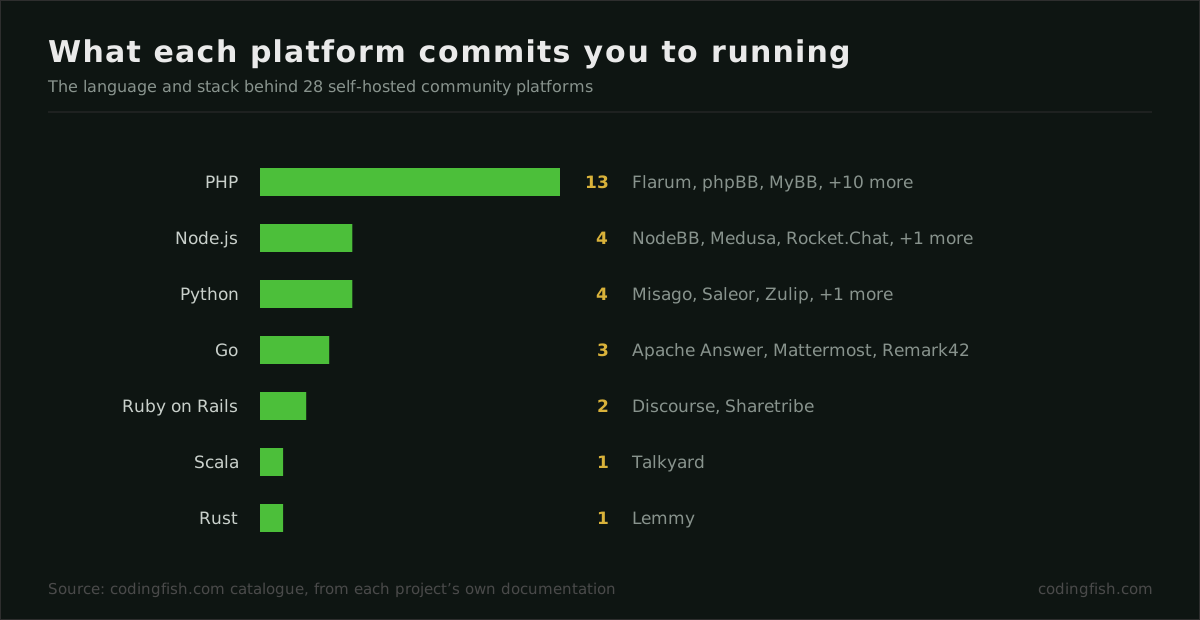
The runtime comes second because it is the part you cannot change afterwards. Adopting a platform is adopting a language, a database and an upgrade cadence for as long as the community lasts. The honest question is not which stack is best but which one somebody available to you can already debug at eleven at night. A team that runs PHP will keep a PHP board patched for a decade and will quietly let a Ruby one drift.
Who keeps the server is third and it is a staffing question wearing technical clothes. Self-hosting is paid in attention rather than money, and attention is what small projects actually run out of. If the person who would perform the upgrade cannot name the database version currently in production, the vendor-hosted option for the same software is cheaper than it looks — and it is the same software, not a compromise.
The licence comes last because it eliminates least and matters suddenly. Two entries here are commercial: a renewal line in the budget, and a vendor to call. Four are AGPL, which obliges you to offer your modified source to the people using it over the network — irrelevant until somebody writes a custom integration, and then not irrelevant at all.
What the shortlist does not tell you
It cannot judge whether a project is well run. The activity band beside each result reports the last commit to its public repository, which distinguishes a platform under active development from one that has gone quiet — but a small, finished tool can sit untouched for a year and still be the right answer.
It also cannot tell you how a platform feels. Install what survives these four questions and post into each one for a week, with the moderation settings turned on rather than off. The board that feels right when it is empty is the one that will feel right at a thousand posts, because what you are testing is the shape of the thing rather than its capacity.
And check the migration path before committing, not after. Every platform here can import from somewhere; the question is what it does to your addresses when it does, and that is covered in the migration guide.
When the four questions do not settle it
Two of them usually decide the matter on their own, and the order above is arranged so that the cheapest eliminations happen first. Occasionally they do not, and the shortlist comes back with three or four platforms that are genuinely close. That is a real outcome rather than a failure of the questions, and there is a fifth consideration that breaks most such ties.
Ask which of them you could leave. Every platform on the shortlist is something you will run for years, and the ones with a maintained importer into a common destination are the ones with a documented way out. Seven of the ten forum platforms catalogued here have one; three do not, and for those the exit is an export, a conversion and somebody's weekend. The importer coverage is read from the project's own repository rather than from a marketing page, which is the only way that particular claim is worth anything.
If the shortlist is still tied after that, the honest answer is that the remaining differences will not decide anything and the cost of deliberating further exceeds the cost of being wrong. Pick the one whose runtime you already operate. That is the same answer as question two, and it is the tiebreak because the operational burden of a stack you do not otherwise run outlasts every feature difference on the list.
Questions people actually ask
How many questions does it take to pick a platform?
Usually two. Conversation shape and the runtime you already operate eliminate most of a twenty-eight-entry catalogue between them; the other two questions — who keeps the server, and whether a paid licence is acceptable — settle what is left. The order matters because the cheapest eliminations come first.
What if three or four platforms are still tied at the end?
Ask which of them you could leave. Seven of the ten other forum platforms here have a maintained importer into a common destination; three do not, and for those the exit is an export, a conversion and somebody's weekend. If it is still tied after that, take the one whose runtime you already run — the operational burden outlasts every feature difference.
Does the shortlist say which platform is best?
No. It says which ones survive your constraints, which is a different and more useful answer. Two platforms can both survive and suit completely different rooms; what separates them at that point is how they feel with ten posts in them, and no filter can report that.
Is a paid platform ever the right answer for a small community?
Frequently. The licence fee replaces some of the operational burden — the vendor carries the upgrade path and part of the support — and for a group with no one to spend a weekend on a migration that trade is straightforwardly cheaper. It is an unfashionable conclusion in a field that treats free as the default.